Aiserveon
Aiserveon
Aiserveon
High-throughput servers, high-density NAS architectures, and caching components optimized for modern backup and recovery environments.
Bridging the gap between physical host integrity, hyperconverged staging layers, and immutable archival clusters.
In the age of exponential data growth and sophisticated cyber threats, a backup solution is no longer simply about copying files to secondary media. Modern enterprises demand continuous, high-performance, and secure storage fabrics that serve as the last line of defense against ransomware, data corruption, and hardware failures. As a leading manufacturer and integrator, we focus on the hardware layer that makes high-speed, zero-data-loss backup pipelines possible.
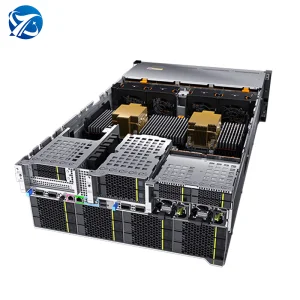
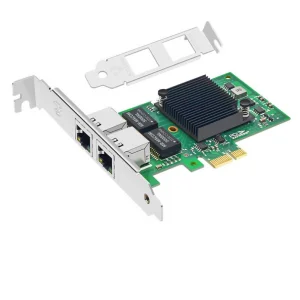
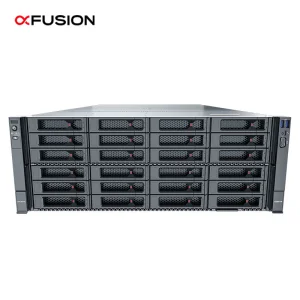
To implement an effective 3-2-1-1-0 backup rule—3 copies of data, across 2 different media types, 1 stored offsite, 1 stored offline (immutable/air-gapped), and verified with 0 errors—enterprises require highly configured compute nodes. Solutions like the xFusion FusionServer 5288 V6 4U Server, with its support for 36 LFF (3.5-inch) hot-swap drive bays, provide the high-density local staging capacity required for fast ingestion, while modern multi-tier hardware RAID configurations driven by cards like the Broadcom 9560-8i Tri-Mode RAID guarantee immediate hardware-level fault tolerance.
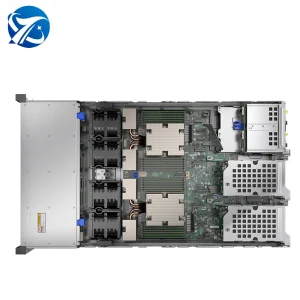
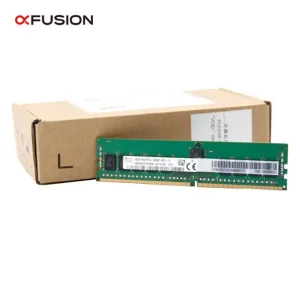
Whether deploying scale-out Network Attached Storage (NAS), hyperconverged disaster recovery appliances, or high-density object storage repositories, the hardware foundation dictates recovery performance. Fast recovery time objectives (RTOs) are gated by drive bus speed, interface limits, and compute throughput. By utilizing DDR5 6400MHz RDIMM ECC memory and dual-socket Intel Xeon Scalable or AMD EPYC platforms, our servers ensure that compute-intensive deduplication, compression, and encryption processes occur inline without bottlenecking production networks.
A premier AI server and intelligent computing infrastructure manufacturer, supplying high-performance hardware clusters and custom data center solutions worldwide.
Operating under the globally respected brand Aiserveon, we have spent years specializing in server system integration, hardware acceleration, and the architecture of enterprise-tier backup repositories. With an engineering-first culture, we integrate OEM/ODM capabilities to customize hardware from the BIOS and firmware layer up to high-density chassis design, serving system integrators, hyperscalers, and enterprise IT divisions globally.
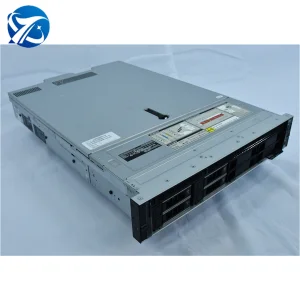
Aiserveon bridges the gap between raw hardware components and functional software-defined storage (SDS) environments. Our engineering teams optimize thermal configurations and bios pathways, ensuring that standard platforms like Dell PowerEdge and xFusion run optimized hypervisors, Windows Server, or Linux-based storage distributions with maximum driver stability.
How next-generation storage buses, artificial intelligence, and non-volatile memory architectures are transforming disaster recovery.
Ransomware increasingly targets online backups. Future-proof hardware architectures use physical write-once-read-many (WORM) controls, logic air-gaps, and localized firmware configurations that block administrative deletes during active attacks.
Integrating GPU accelerators (such as the FusionServer G5500 V6 AI rack system) into storage fabrics. This allows systems to analyze streaming backup data blocks in real time, detecting abnormal entropy spikes indicating hidden ransomware encryption.
Replacing legacy iSCSI protocols with NVMe-oF over InfiniBand or RoCE v2. This lowers data transfer latencies down to microseconds, maximizing the parallel throughput of NVMe SSDs to dramatically decrease recovery timelines (RTOs).
Aiserveon’s research and development roadmap focuses heavily on aligning with these technological milestones. By manufacturing systems that support PCIe Gen 5 configurations, Tri-mode RAID interface cards, and high-density, low-power NVMe backplanes, we prepare enterprise storage clusters for high-volume data streams. This strategy allows clients to maintain continuous replication operations without degradation of production workload performance.
Sector-specific enterprise backup infrastructure configurations tailored to distinct performance, compliance, and scale requirements.
Financial transaction platforms cannot tolerate data loss. The target storage system must ingest database transactions in near real-time, executing synchronous replication to local high-speed arrays while maintaining an asynchronous mirror to a remote disaster recovery center.
Recommended Hardware Profile: Dual-socket compute servers configured with enterprise NVMe drives, Broadcom 9560-8i RAID cards utilizing supercapacitors for write cache protection, and ultra-high-speed DDR5 ECC RDIMM memory blocks to eliminate write delays.
Healthcare institutions are bound by strict legal regulations (such as HIPAA) requiring patient records, DICOM imagery, and diagnostic data to be preserved securely for decades.
Recommended Hardware Profile: High-density 4U storage architectures (such as the xFusion 5288 V6 featuring 36 LFF bays) designed to host cost-efficient enterprise SATA/SAS drives. These setups are coupled with cold-storage tiered architectures that spin down inactive drives to reduce power consumption while preserving online availability.
Cloud service providers require multi-tenant, software-defined storage architectures that scale dynamically. Hardware nodes must act as unified blocks of resource pools that can shift workloads dynamically.
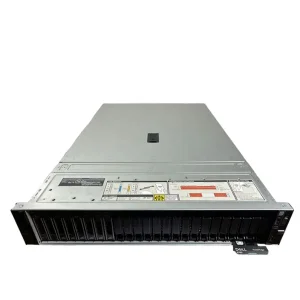
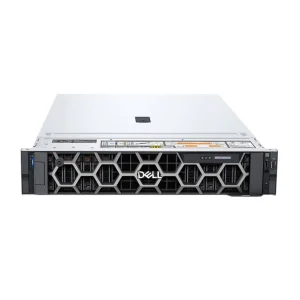
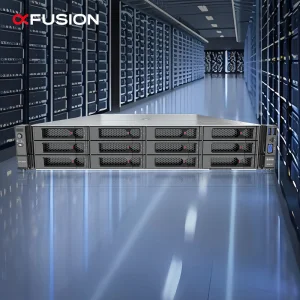
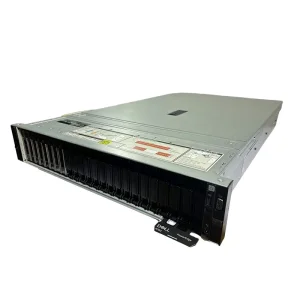
Recommended Hardware Profile: 2U dual-socket systems (like the xFusion 2258 V7 or Dell PowerEdge R760 series) with hybrid drive bays (combining low-latency NVMe cache tiers with high-capacity backend SAS hard drives), configured with dual-port 100GbE network interface cards to prevent multi-tenant network bottlenecks.
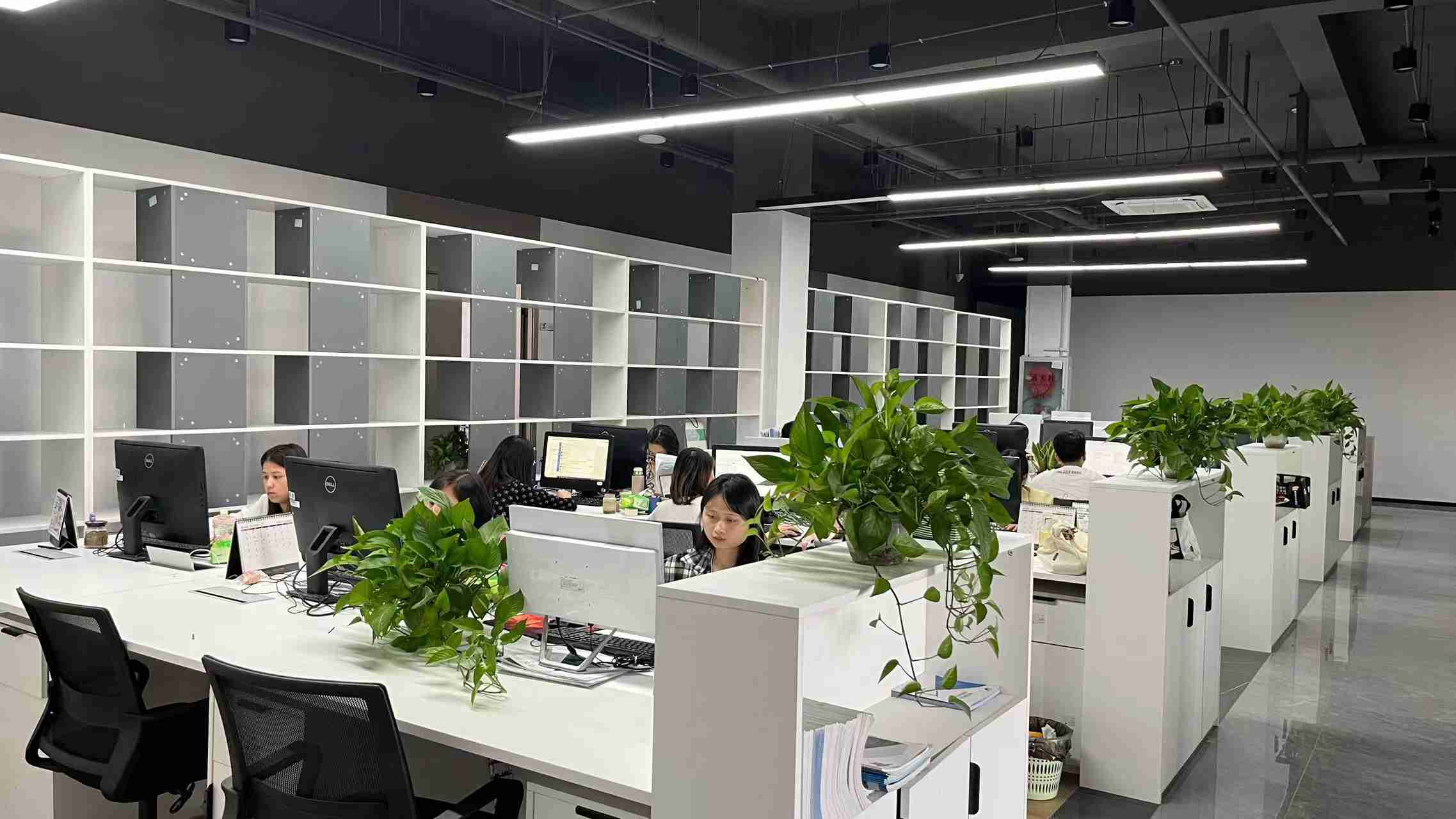
Ensuring hardware reliability through rigorous quality inspection frameworks and a strong network of supply chain partners.
At Aiserveon, we believe structural hardware stability dictates data integrity. A single bit-flip in a backup stream can corrupt an entire recovery file. To prevent hardware-level anomalies, our manufacturing facilities operate under a strict quality management system featuring four primary inspection milestones:
Our relationships with over 850 upstream and downstream partners allow us to secure rare components (processors, memory chips, high-speed controllers) even during supply-chain disruptions. This guarantees predictable production schedules and stable lead times for global clients.
Key criteria procurement directors and infrastructure architects prioritize when selecting backup hardware suppliers.
Enterprise procurement teams must look beyond unit costs to evaluate vendors based on the total cost of ownership (TCO) and hardware lifespan. A reliable backup supplier must meet several critical standards:
Ensuring hardware platforms align with local standards, cybersecurity protocols, and environmental requirements.
Operating internationally requires meeting regional regulations. Aiserveon designs and certifies its hardware to comply with worldwide certifications including CE, FCC, RoHS, WEEE, and UL standards. This compliance ensures that our systems can be deployed into corporate datacenters across North America, Europe, the Middle East, and Southeast Asia without regulatory delays.
Furthermore, data sovereignty laws (such as GDPR in the EU and CCPA in California) dictate that backup data must remain local and secure. Our hardware platforms support self-encrypting drives (SED) using Opal storage specifications, secure boot configurations, and physical hardware intrusion logs to ensure compliance with strict local security policies.
Our localized support partners provide hardware replacement parts and engineering assistance globally, ensuring enterprise deployments maintain operational continuity.
Answers to complex questions concerning storage array configuration, controller choices, and hardware optimization.
Browse our selection of enterprise-class hardware platforms, memory options, and acceleration systems built for modern backup architectures.